
How Online Casino Games Really Work: A Technical Guide to Jili Slot
How Online Casino Games Really Work: A Technical Guide to Jili Slot The Philippines online casino space has matured significantly over the past three years. Filipino players are no longer satisfied wi...
How Online Casino Games Really Work: A Technical Guide to Jili Slot
The Philippines online casino space has matured significantly over the past three years. Filipino players are no longer satisfied with surface-level game descriptions or bonus screenshots. They're asking better questions: what does a slot's return-to-player percentage actually mean over 500 spins? How do betting structures in card games affect expected value? Why does one developer's volatility profile feel fundamentally different from another's at the same stake level?
This is the kind of analysis that belongs in this conversation. Rather than listing what games are available, this guide goes deeper — examining the mechanical underpinnings of the three major game categories found on Jili Slot, and what Filipino players should actually understand before committing peso value.
The goal is informed play, not promotional hype. If you're depositing via GCash and playing across Manila, Cebu, and Davao metros, the mechanics matter more than the marketing.
Photo by Pavel Danilyuk on Pexels
Poker Mechanics: Hand Rankings, Betting Structures, and What the House Actually Takes
Poker remains the most mechanically complex category in any online casino library. On Jili Slot, the poker variants available tend to center on community-card formats — games where your hand strength depends not just on what you hold, but on what the table reveals and how other players respond. Understanding the hierarchy of hand rankings is foundational: a High Card sits at the bottom, followed by One Pair, Two Pair, Three of a Kind, Straight, Flush, Full House, Four of a Kind, Straight Flush, and the Royal Flush at the top.
What separates skilled play from casual play isn't memorizing this list — it's understanding that most hands lose. In a standard nine-handed game, you're only going to show down a strong hand roughly 20–25 percent of the time. The other 75 percent requires either fold discipline or creative play with marginal holdings. Filipino players who grew up playing Tong-its or Pusoy in physical settings already have transferable pattern recognition skills — the betting vocabulary is different, but the probabilistic thinking translates.
The house take in poker-style games on Jili Slot typically operates through a rake structure — a small percentage extracted from each pot rather than a side payment. This matters because it means your expected return is calculated after the rake, which shifts optimal strategy slightly toward tighter play in games where the rake is higher relative to pot sizes. For GCash-funded sessions, tracking actual peso outlay against time spent at the table gives a clearer picture than session-by-session win/loss.
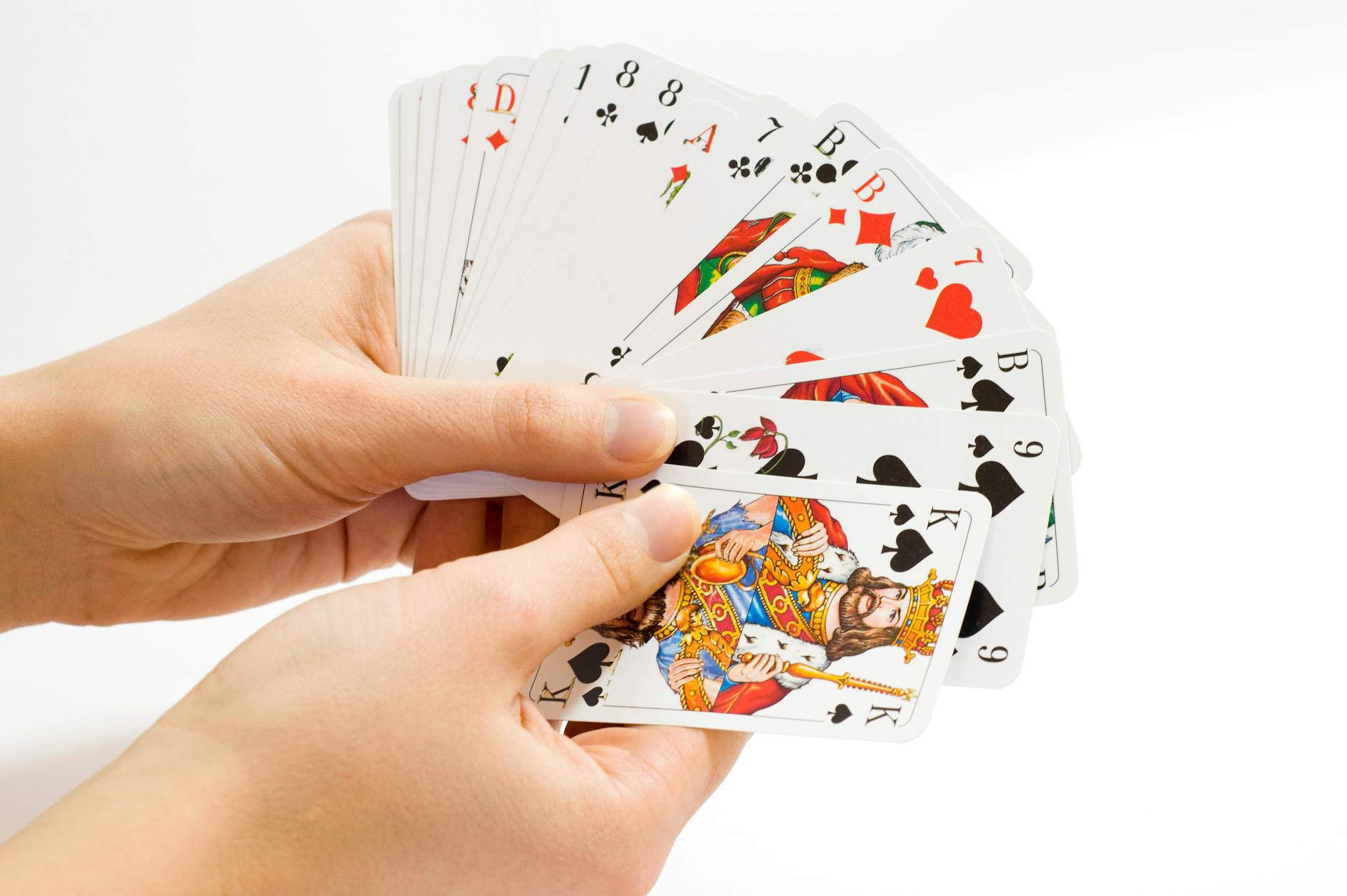
Photo by Jonathan Borba on Pexels
Slot Machine Mathematics: RTP, Volatility, and Why Golden Empire Feels Different from Fortune Tiger
Slot games are fundamentally different from card games because the player has zero decision influence over the outcome of any given spin. The result is determined by a Random Number Generator at the moment of spin — a piece of software that produces a new random value every millisecond, mapping to specific reel positions. Understanding this removes any illusion of "due" outcomes. A machine that hasn't paid in forty spins is not more likely to pay on the next one. Each spin is independent.
The metric most worth understanding is Return to Player — RTP — expressed as a percentage over a theoretical infinite number of spins. If a game lists 96.5 percent RTP, that means for every ₱1,000 wagered, the game is statistically expected to return ₱965. The house edge is the remaining 3.5 percent. Jili Slot's library includes titles with varying RTP profiles, and players who check this number before playing are making a structurally better decision.
Volatility is the second axis. High-volatility slots like Golden Empire pay larger amounts less frequently — a session can feel dry for extended periods before a single bonus round delivers a payout that covers an hour of play. Low-volatility slots like Fortune Tiger (a PG Soft title also accessible through this platform) produce smaller, more consistent wins that maintain bankroll but rarely deliver dramatic multipliers. Neither is objectively better — the choice should align with your session length, deposit size, and risk tolerance.
For players funding via Maya or bank transfer with a ₱1,000 session budget, low-to-medium volatility games at moderate bet levels tend to produce more sustainable play time. For players with larger bankrolls targeting bonus features, high-volatility titles with higher bet-per-line configurations are the appropriate vehicle — but the variance must be accepted.

Photo by Tosa Vlad on Pexels
Live Dealer Games: Baccarat, Crazy Time, and the Real-Time Wagering Experience
Live dealer games occupy a specific niche — they replicate the physical casino table experience through high-definition streaming, with actual human dealers managing real cards or physical game wheels. For Filipino players who value social interaction alongside gambling, this category consistently outperforms pure RNG games in engagement metrics.
Baccarat is the entry point for most live dealer players. The game is straightforward at its core: wager on whether the Player hand or Banker hand totals closer to nine, or bet on a tie. Card values are summed with only the last digit counting — a 7 and an 8 make 15, which counts as 5. The Banker bet carries a house edge of roughly 1.06 percent, making it one of the lowest-edge wagers available in any casino category. The Player bet sits around 1.24 percent. The tie bet, despite its attractive payout, carries a house edge exceeding 14 percent — a mathematical structure that makes it a consistently poor value choice.
Crazy Time, an Evolution Gaming title accessible through the platform, adds game-show mechanics to the live dealer format. A large money wheel is the central visual, with segments offering multipliers and four bonus rounds — Cash Hunt, Pachinko, Coin Flip, and Crazy Time itself. The base game carries a house edge ranging from roughly 3.9 percent to 9.1 percent depending on the segment selected. The bonus rounds offer higher variance — the potential multiplier can reach extraordinary levels, but the frequency of bonus round triggers is low by design.
For live dealer play, stable internet matters more than bankroll strategy. Manila and Cebu connections on fiber broadband generally perform well; mobile users on 4G in rural Davao areas may experience latency that affects the live experience. Playing on WiFi rather than cellular is consistently recommended for this category.

Photo by Pavel Danilyuk on Pexels
Game Selection Strategy: Aligning Mechanics with Your Deposit Method and Bankroll
The most common mistake Filipino players make is choosing a game based on visual appeal or recent big-win screenshots rather than structural compatibility with their session parameters. The alignment that matters most has three components: stake level relative to bankroll, game volatility relative to session length, and deposit method processing speed.
GCash remains the dominant payment method for a reason — transfers process within minutes, and most platforms, including Jili Slot, reflect deposits quickly enough to begin play without delay. Maya offers similar speed. Bank transfer is slower, typically requiring 1–3 business days for withdrawal processing, which makes it less suitable for players who want same-day access to winnings.
Bankroll sizing for slot play follows a simple structural rule: a session at a given bet level should be able to survive 100–150 spins without going bust. If you're playing at ₱5 per spin, a ₱750 bankroll covers roughly 150 spins at that level — which is sufficient for a meaningful sample of outcomes without risking a complete depletion on variance. For table games, the consideration shifts to minimum bet relative to total bankroll: a ₱2,000 bankroll at a ₱50 minimum bet table allows roughly 40 betting decisions, which is enough to see whether the table is running hot or cold in a given session.
The local Philippine game variants available — including Tong-its variants, Color Game formats, and Jili Luk — deserve separate consideration. These games often carry lower house edges than their international counterparts because they're built for a player base that understands the mechanics deeply from home-game experience. That familiarity is an information edge, however small, and it belongs in your selection calculus.

Photo by MART PRODUCTION on Pexels
Frequently Asked Questions About Playing on Jili Slot in the Philippines
What is the minimum deposit to start playing on Jili Slot?
Most Filipino-facing platforms, including Jili Slot, accept GCash deposits starting at ₱100–₱200. Bank transfer minimums vary by institution. Always confirm the exact minimum before initiating your first deposit to avoid failed transactions.
Are the games on Jili Slot fair? How can I verify this?
Reputable platforms use certified Random Number Generators audited by third-party testing agencies. Look for certification logos in the site footer. The theoretical RTP of each game is published in the game's information panel — this is the verifiable fairness metric you should reference.
Can I play on my phone, or do I need a desktop?
Jili Slot's platform is mobile-first, optimized for both Android and iOS browsers. No app download is required for standard browser play. Performance on mid-range Android devices is generally solid for slots and live dealer games, though older devices may struggle with high-definition live streams.
What should I do if my GCash deposit doesn't reflect immediately?
First, confirm the transaction was completed in your GCash app with a reference number. Then check your spam or junk folder for platform notifications. If the deposit still doesn't appear after 30 minutes, contact the platform's customer support with your GCash reference number. Withdrawal processing through GCash typically completes within 24–48 hours on most platforms.